The hints end the "is this a 5 or an 8?" debates
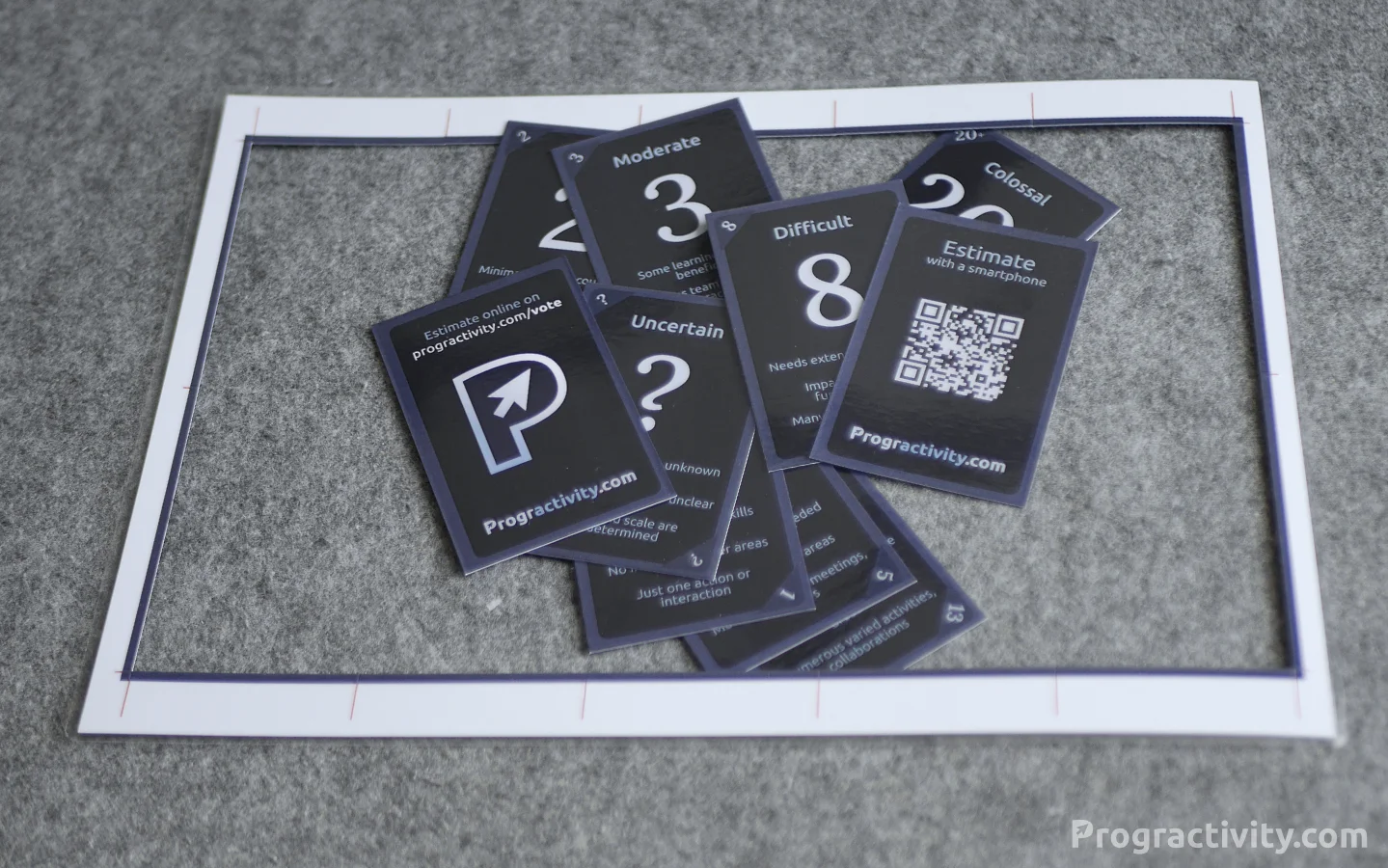
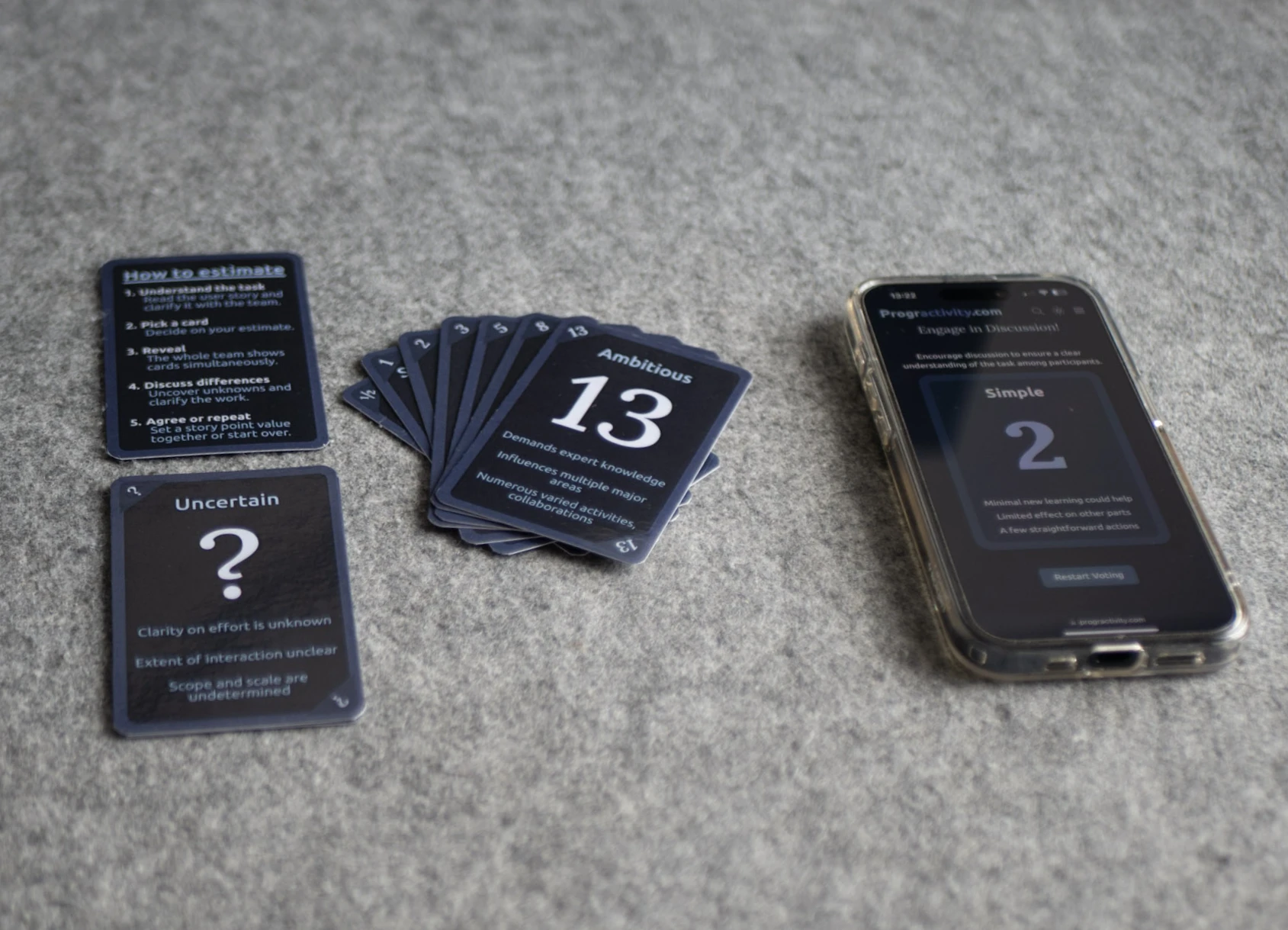
Agile Poker builds on the same idea as Planning Poker®: everyone votes at the same time, then you discuss the differences. The difference is in the deck. Traditional decks have 13+ cards and no guidance on what each number means, so teams argue about definitions. This deck has 9 cards, and each one carries 3 hints that explain the point value. That turns estimation into a team alignment exercise, not just a number-picking ritual. Sprint planning meetings get shorter because you skip the 10-minute detours about what a "medium" task even is.
Different estimates surface misunderstandings
Everyone reveals their card at the same time. If one person plays a 2 and another plays a 13, that gap means someone knows something the rest of the team doesn't. You talk about it now instead of discovering it mid-sprint.
The 20+ card means "break this down first"
Anything bigger than 13 is too vague to estimate honestly. The 20+ card is a built-in rule: if you can't estimate it, you split it. Smaller tasks are faster to finish, easier to review, and less likely to drag on for a week.
The ? card removes the pressure to guess
Sometimes you just don't know enough about a task. Instead of picking a random number to avoid looking uninformed, play the question mark. The team pauses, clarifies, and then estimates with actual context.
A smaller Agile Poker deck means faster decisions
The sequence is ½, 1, 2, 3, 5, 8, 13, 20+, and ?. Nine values. You spend less time agonizing over whether something is a 3 or a 5 when those are your only options in that range. Constraints speed things up.